
NXP MC56F8033VLC: A Comprehensive Technical Overview of the Digital Signal Controller
The NXP MC56F8033VLC represents a pivotal component in the landscape of hybrid digital signal controllers (DSCs), merging the real-time control prowess of a digital signal processor (DSP) with the user-friendly architecture of a microcontroller (MCU). This powerful combination is engineered to address the complex demands of sophisticated digital control and processing applications across industrial, automotive, and consumer markets.
At the heart of the MC56F8033VLC lies the core of the 56800E family, a highly efficient 16-bit DSC engine. This core is capable of operating at a peak frequency of 32 MHz, delivering up to 32 million instructions per second (MIPS). Its Harvard architecture, featuring separate program and data buses, enables simultaneous access to instructions and data, drastically enhancing computational throughput for signal processing algorithms. The core is further bolstered by a hardware loop controller and a parallel instruction set, optimizing performance for critical inner-loop processing tasks common in digital control systems.
Memory and system architecture are pivotal to its performance. The device is equipped with 32 KB of embedded Flash memory and 4 KB of RAM, providing ample space for complex application code and data handling. The integrated memory is designed for fast access, minimizing wait states and ensuring the core operates at maximum efficiency. A sophisticated interrupt controller and on-chip debugging capabilities via JTAG/OnCE™ facilitate robust system development and troubleshooting.
A standout feature of the MC56F8033VLC is its rich set of dedicated peripherals tailored for power and motion control. It includes a Pulse Width Modulation (PWM) module with fault protection inputs, essential for precisely driving motors in industrial automation and automotive systems. For accurate data acquisition, it is outfitted with two 12-bit Analog-to-Digital Converters (ADCs) capable of simultaneous sampling, ensuring accurate and synchronized reading of multiple sensor inputs. Additional communication interfaces, such as CAN 2.0 B, SPI, and SCI (UART), provide versatile connectivity options for networking within larger electronic systems.
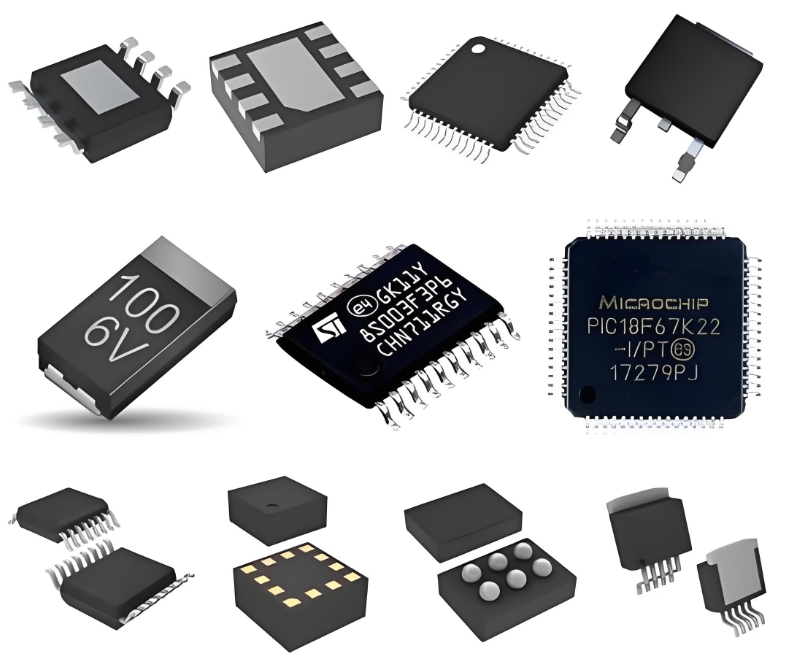
The device operates from a 3.3V supply and is offered in a compact 32-pin LQFP package, making it suitable for space-constrained applications. Its design emphasizes low power consumption and high noise immunity, which are critical for reliability in electrically noisy environments.
In practical terms, the MC56F8033VLC excels in applications like precise motor control (e.g., BLDC, PMSM), digital power conversion (SMPS, inverters), and intelligent sensing. Its ability to execute complex mathematical functions—such as PID control loops, park/clarke transforms, and filter algorithms—in real-time makes it an indispensable component for advanced electronic designs requiring both control and signal processing.
ICGOODFIND: The NXP MC56F8033VLC Digital Signal Controller is a highly integrated and efficient solution that successfully bridges the gap between traditional microcontrollers and DSPs. Its robust 56800E core, specialized control peripherals, and versatile connectivity options make it an exceptional choice for engineers designing next-generation digital control systems that demand high performance, precision, and reliability.
Keywords: Digital Signal Controller (DSC), 56800E Core, Pulse Width Modulation (PWM), Analog-to-Digital Converter (ADC), Motor Control.

